



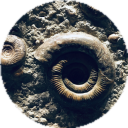






























No.63 Ammonite (fossil)
Sample Outer Dimension - X:52.1mm Y:52.0mm Z:22.7mm
measuring device - phoenix nanotom m
Voltage - 160kV
electric current - 80µA
voxel size - 35.0μm


Ammonites are cephalopods that appeared in the Devonian period of the Palaeozoic and became extinct at the
end of the Mesozoic. They belong to the same group as squid, octopus and nautilus. The interior of the flat,
coiled shell is finely divided by septa into many gas chambers, while the animal itself occupied the
outermost body chamber and is thought to have controlled its buoyancy by moving gas and liquid in and out of
those chambers. The line where a septum meets the shell wall is the suture line, and its complexity is a key
to classification.
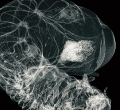
One flank of this specimen is still covered by rock matrix; only the other face is exposed. CT let us look
inside without removing the matrix. Slices parallel to the coil show the septate chambers almost to the
centre of the spiral, growing larger toward the outer whorls.
Shell, filling and matrix differ so little in X-ray absorption that a simple projection shows almost
nothing inside. Thin slabs about 2 mm thick along the coil, and renderings of density changes only, revealed
the chambers, the septa and the coiling.
A network of fine cracks runs through the fossil, filled with a denser crystallised mineral (veins). They
appear as bright streaks in the CT images, and the 3D data shows how they spread in three
dimensions.
*The species, locality and geological age of this specimen, and the mineralogy of the veins, have not been
confirmed.



- CONTENTS LIST


